 0
0
 0
0
The 9.10 train from Thatcham gets us into Paddington in 41 minutes – it just stops at Theale and Reading. The forecast was for another hot day so the plan was to stick to the tube lines with aircon and hope we could find shade whilst walking around. Perhaps not the best time to organise a trip into London! Paddington to Westminster was all very straightforward – Elizabeth Line to Bond Street where we switched to the Jubilee Line to Westminster. All very smooth and had just enough time for a bacon butty breakfast in St Stephens Tavern before our tour.
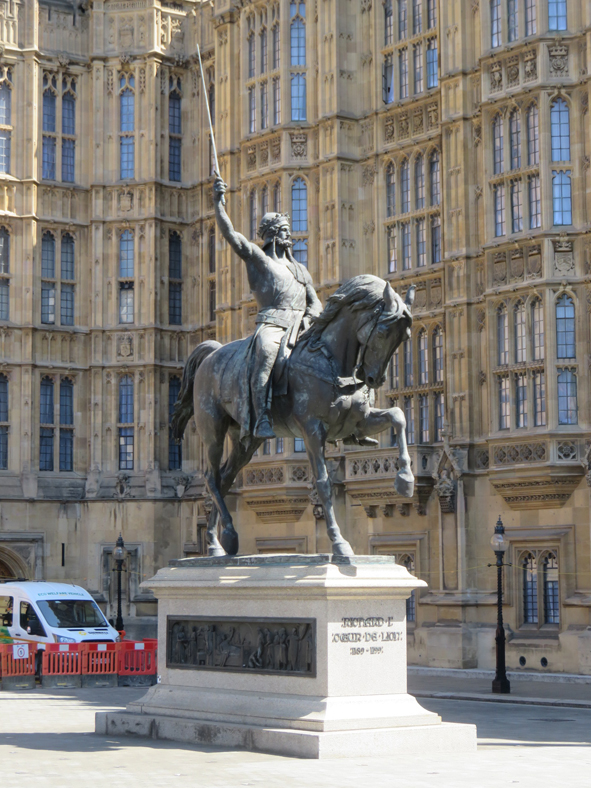
We had twenty mins or so to kill before we could head through security so wandered along the front of the Palace of Westminster to Victoria Tower at the opposite end to Big Ben. The security fence around the palace had been extended out as I was sure you used to be able to get up fairly close to the statues of Oliver Cromwell and Richard I – Richard Coeur de Lion.
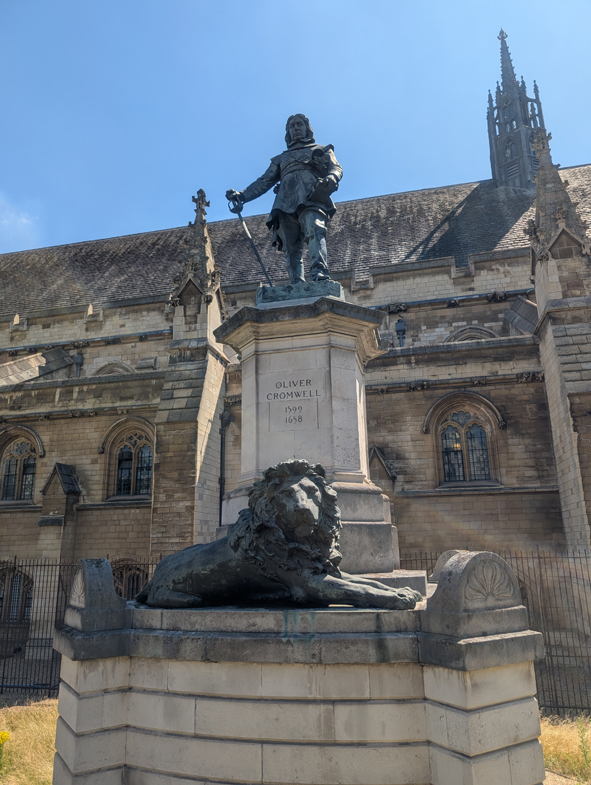
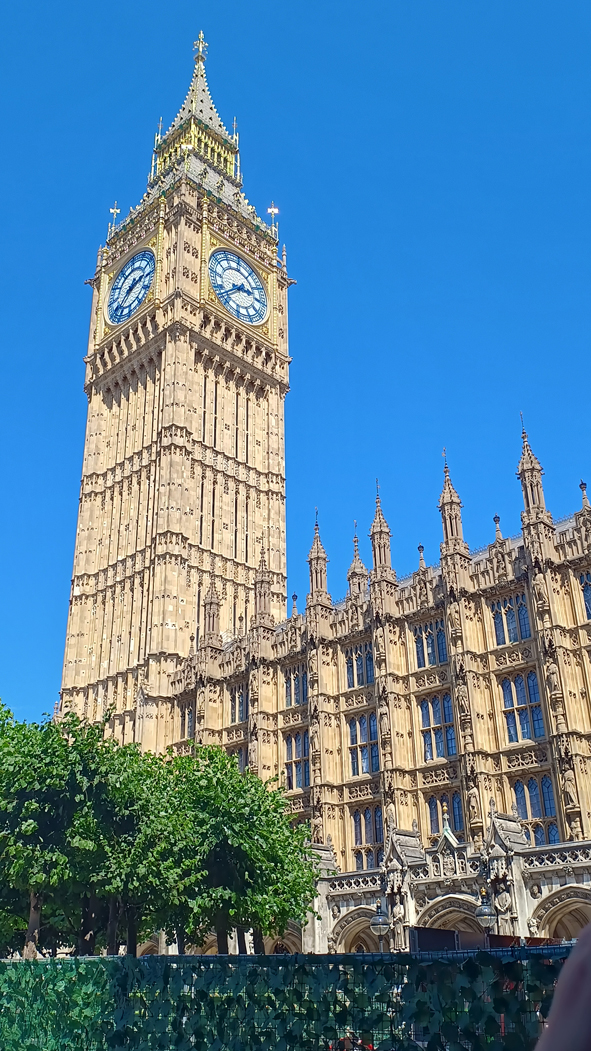
The Palace of Westminster is truly a magnificent building. We usually view from the other side of the Thames – it’s difficult to appreciate the full building from this side. It’s one of the most recognised buildings in the world, and owes its stunning Gothic architecture to the 19th-century architect Sir Charles Barry. It is Grade I listed and part of an UNESCO World Heritage Site.
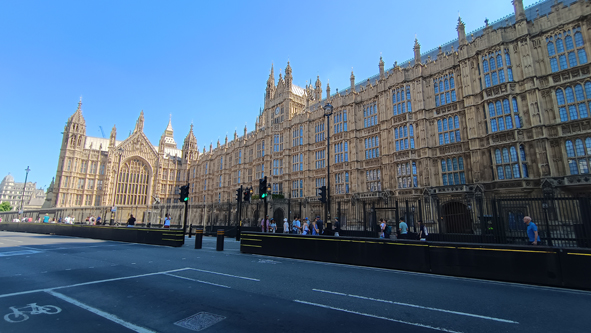
As well as the seat of Government, it houses an iconic collection of furnishings, archives and works of art. The same architect was involved in the renovations of Highclere Castle – there’s more than a passing resemblance.
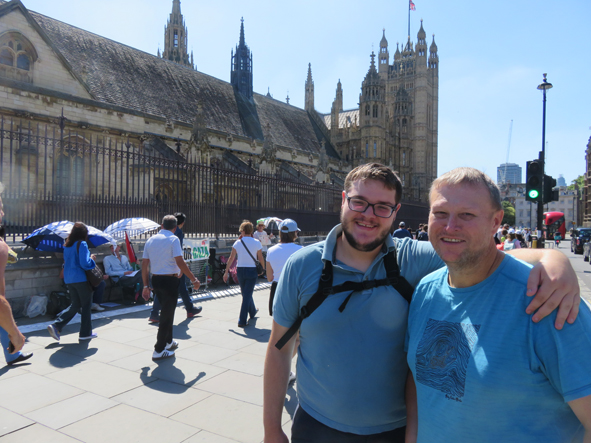
We didn’t realise there was an English Heritage site at the far end … The Jewel Tower. We’ll save that visit for another time. It looks quite small so probably wouldn’t take too long.
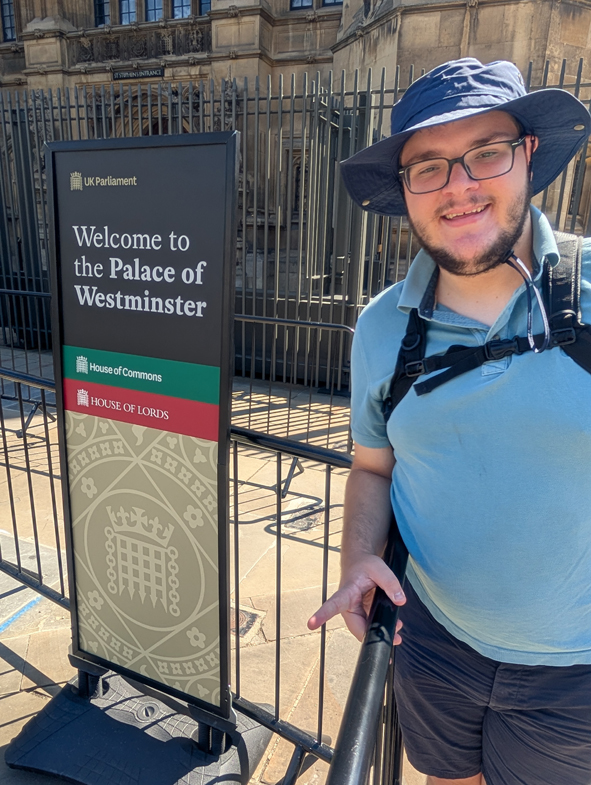
We were asked to allow 20 minutes to get through security – just a short queue and unsurprisingly tje checks were very tight with airport style security. The one thing that struck us throughout was how friendly the police and security were.
The Palace of Westminster is crumbling so lots of renovation work ongoing with some outside sections around base of Big Ben boarded up. We followed the signs and ended up in Westminster Hall; the oldest part of the Palace of Westminster and over 900 years old. The hammer-beam roof is particularly impressive and is the largest clearspan roof in England. It uses horizontal trusses to span large distances and not a single nail was used.
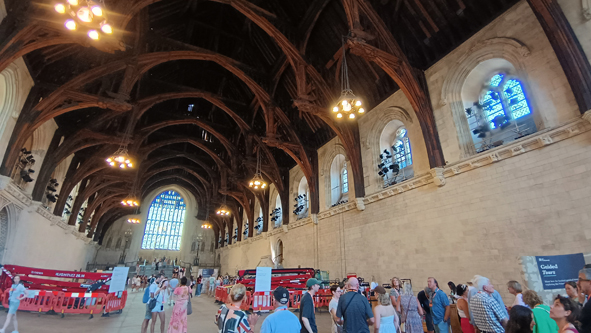
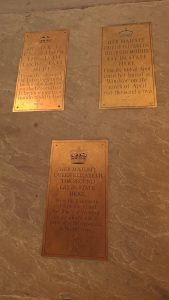
The hall is used on a variety of occasions – foreign heads of state have addressed parliament here and monarchs and notable prime minsters have laid in state here, most recently HM Queen Elizabeth II in 2022.
Her parents had also laid in state here previously. Prince Philip died during COVID restrictions so his funeral was a very low-key ceremony held at St George’s Chapel at Windsor.
In the early days, it was the venue for important state trials, including impeachment trials and the trials of Charles I, William Wallace, Thomas More and Guy Fawkes. Plaques on the floor of the hall mark the most notable of these events.
There was about 30 of us on our tour. Mainly Brits but a couple from overseas as well. We could take photos in Westminster Hall and St Stephens Gallery but after this, no more photos could be taken.

Image linked from Wikipedia
The tour took us around the main rooms in the palace. The first half of the tour took us to the “Lords” half of the building. The entrance that the monarch uses for the State Opening of Parliament in at the base of Victoria Tower with the Monarch’s Robing Room in an adjacent room. We then entered the Robing Room and the tour then walked the route the Monarch would take into the House of Lords.

By UK Parliament – Flickr, Fair use, https://en.wikipedia.org/w/index.php?curid=27141518
First through the Royal Gallery featuring portraits of many of the monarchs and their consorts. King Charles and Queen Camilla were not yet included and the powers that be have the headache on who to move – there wasn’t any obvious space to include them. The gallery also included two enormous water-glass paintings of The Death of Nelson and one of Wellington after the Battle of Waterloo. It was here our guide got her dates mixed up – Jon and Callum noticed immediately, but not sure anyone else did. They were stunning.
From here, it was then into the Lords Chambers itself, passed the gold (gilted) thrones the monarch would sit on in the chamber. The benches in the House of Lords were red – and starting to look a little worn! Far more Lords than there are seats, but the Lords are only expected to be in chambers when there is a bill they are interested in debating and voting on.

By ukhouseoflords – Minute’s silence, CC BY 2.0, https://commons.wikimedia.org/w/index.php?curid=103682437
Rather than aye’s and nay’s, in the House of Lords you have Contents and Discontents when it comes to a vote. If the split isn’t obvious to the Lord Speaker, the Lords clear the chamber and head to one of the voting corridors flanking the chambers to register their vote.
From here, it was following the path Blackrod walks to summon the House of Commons to the House of Lords. First through the Peers Court – a large meeting room where the Lords conduct their business and paperwork for the bills being debated are available to collect. From here, it was onto the Peers Lobby – a small open room where members of the House of Lords can meet constituents and conduct other business. Again, the lobby featured more portraits of Kings and Queens from the Tudor and Stuart era.

By © Jorge Royan / http://www.royan.com.ar, CC BY-SA 3.0, https://commons.wikimedia.org/w/index.php?curid=15100969
The central point of the Palace is the aptly named Central Lobby – it’s featured on the news regularly as this is one of the locations the press report from when covering Government business. They have their own Post Office here and open.
Quite funny as the chandelier reminded everyone of that sketch from Old Fools and Horses.
Each of the four end walls of the central lobby was dedicated to one of the four patron saints of the United Kingdom; St George, St Andrew, St Patrick and St David.
Straight through the Central Lobby into the Members Lobby – where the MPs can meet their constituents. There’s also the pidgeon holes for all the MPs – we spotted our MP – Lee Dillon and the guide pointed out the Prime Ministers and other notable MPs.
One thing that we learnt is that any can just rock up at the Houses of Parliament to lobby their MP. If they are not in, a note can be left in their pigeon hole and they have 28 days to respond.

By Pete Souza – http://www.whitehouse.gov/photos-and-video/photogallery/may-2011-photo-day, Public Domain, https://commons.wikimedia.org/w/index.php?curid=15328239
The House of Commons was extensively damaged by World War 2 bombing. Winston Churchill insisted that the chambers was rebuilt in a simplified way in the same footprint and was to seat the same number of MPs as originally sat in the chamber. Again, there are more MPs than seats in the House of Commons – when there is a big bill being debated or for the State Opening of Parliament, every single inch of standing space is taken.
The one thing he insisted on was that the stone archway of the door leading into the Commons Chamber was been left unrepaired as a reminder of the evils of war. It’s now known as the Rubble Arch or Churchill Arch – he wanted to remind all future MPs of the horrors of war and it’s impact when making decisions. Winston Churchill also appealed to the Commonwealth to help furnish the Commons as Britain was broke! India and Pakistan donated the doors at either end and other nations donated desks, chairs, inkwells and other essentials.

By © UK Parliament / Maria Unger – UK Parliament, CC BY 3.0, https://commons.wikimedia.org/w/index.php?curid=146437874
We were all struck just how small the Commons chamber was – it looks much bigger on TV! At the ends of the chambers were plaques to commemorate the fallen MPs in the World Wars. Along the sides, quite poignantly, plaques to remember MPs Jo Cox and David Amiss – both killed recently in their constituencies whilst going about their parliamentary business.
From here, back to the Central Lobby and St Stephens Gallery. It was whilst sat here that Sir Lindsay Hoyle walked passed us. As parliament was in Summer Recess, not sure why he was there!
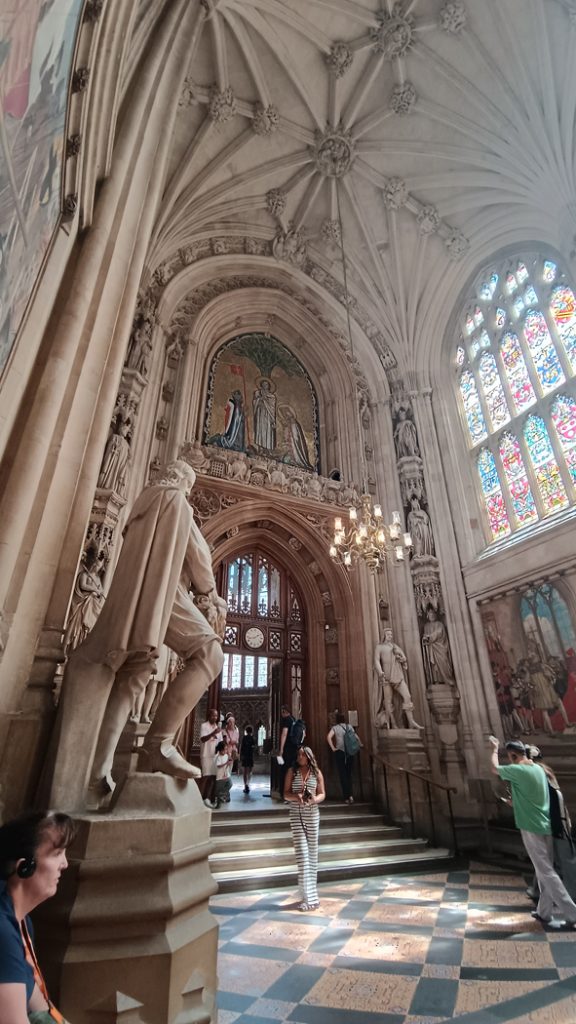
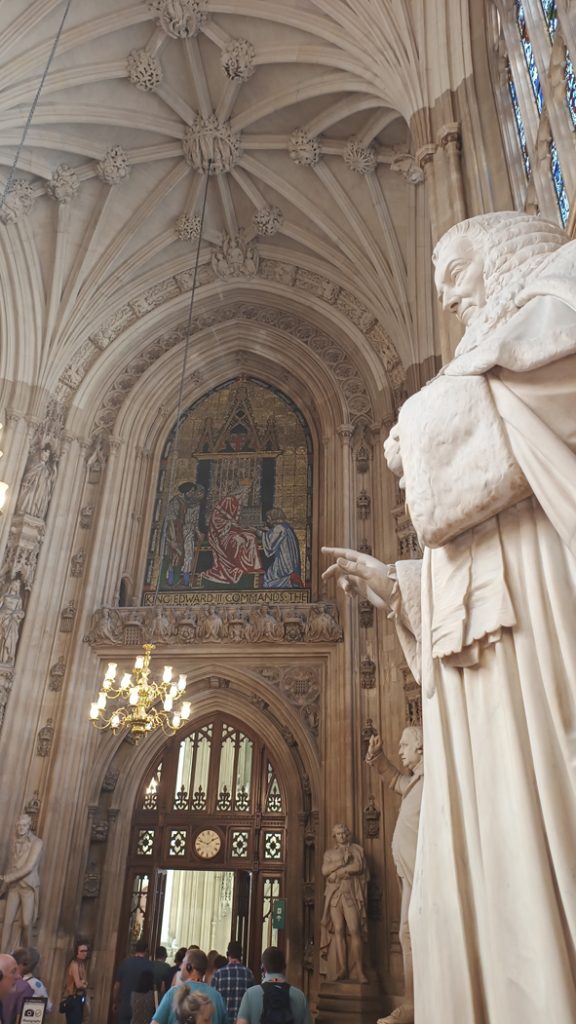
We paused at the New Dawn artwork again as we left. The colours and pattern had changed since we started the tour an hour or so previously.
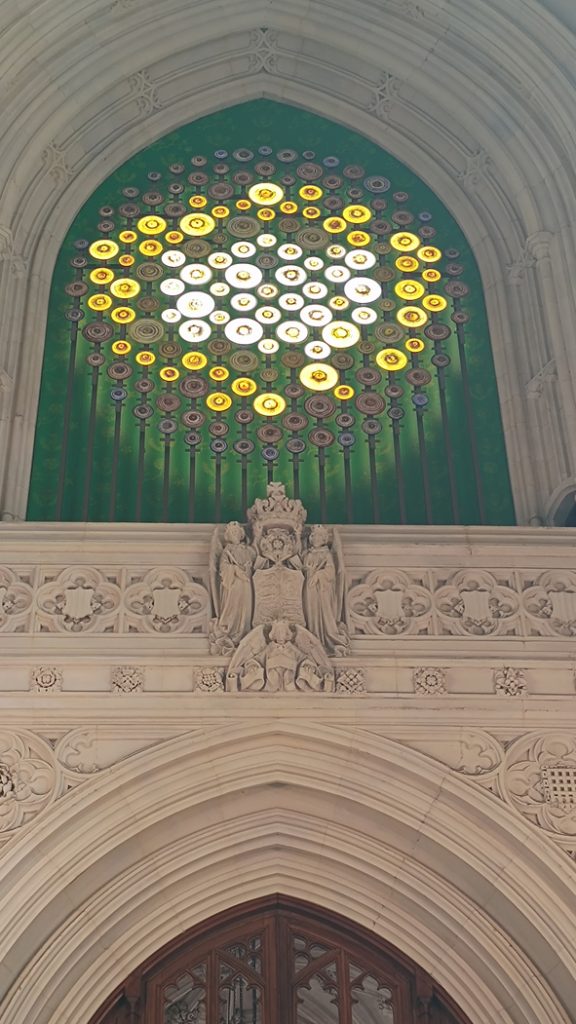
Back to Westminster Hall where the tour ended. A quick drink in the cafe before heading out. Again you headed out through the scaffolding but you caught the most magnificent glimpse of Big Ben. The tower had spent 5 years from 2017-2022 under wraps undergoing renovations. The end result was stunning – the clock face ironwork was a deep blue and the details on the stonework surrounding the clock faces was intricate – prior to the work, you didn’t really appreciate this. The armed police officer stationed here was really friendly – encouraging photos being taken. Must be the best view of Big Ben and Elizabeth Tower. What a spot to be given to work!
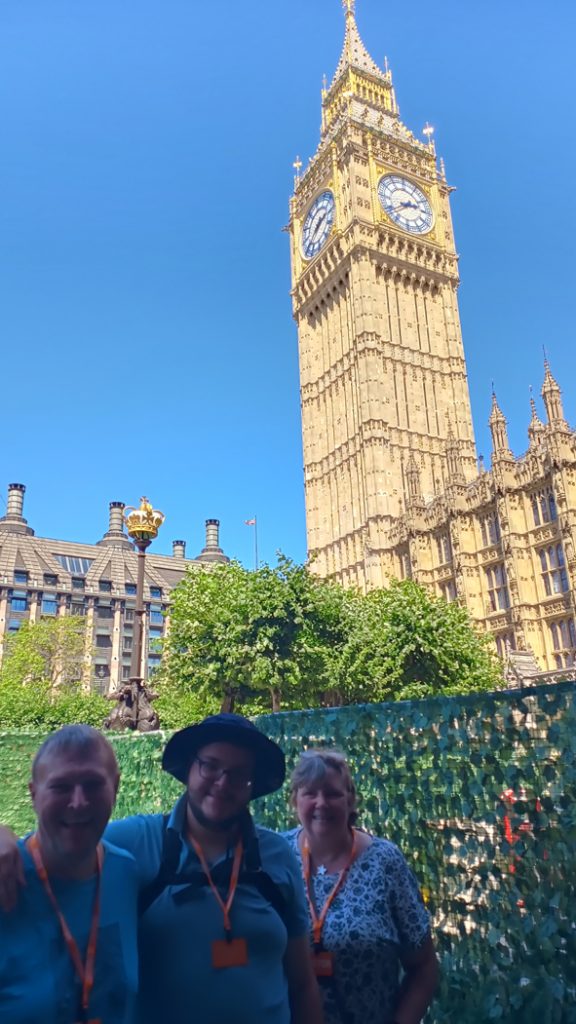
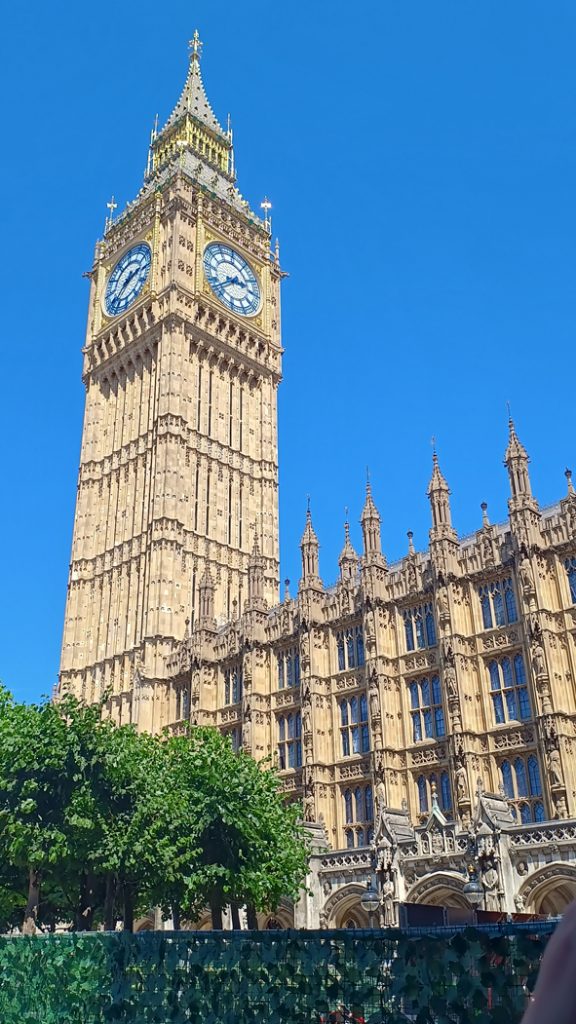
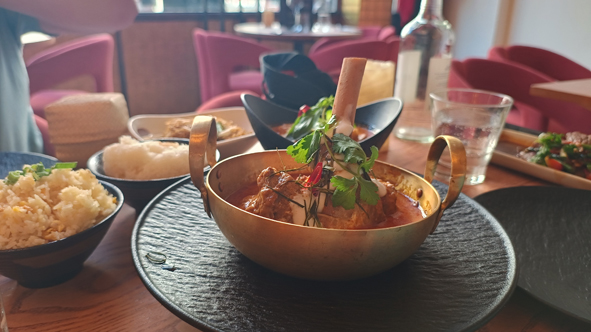
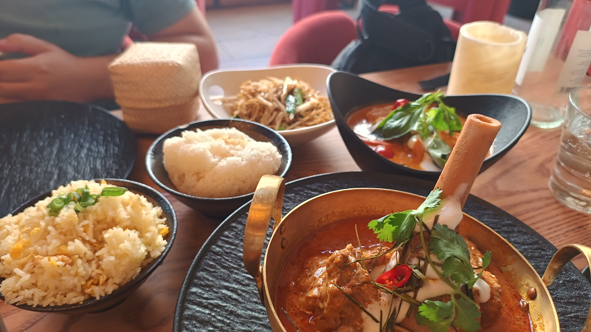
It was really hot outside so we decided to walk down Whitehall (on the shaded side!) to Trafalgar Square. A decision to be made on whether to head towards Covent Garden to find somewhere to eat or search the roads just off Trafalgar Square instead. The latter won out. Just around the corner, we stumbled across Thai Square and realised we had eaten here before.
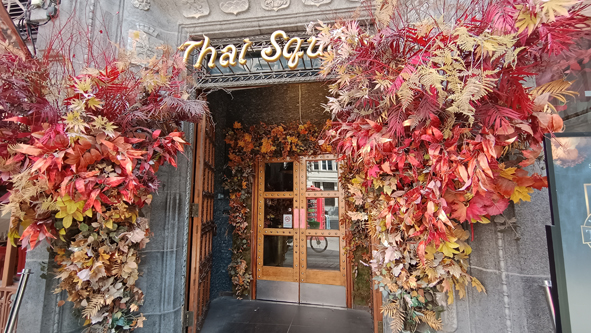
We went for a platter of Mixed Starters following by mains. My Lamb Shank Penang Curry was amazing. Jon opted for a Prawn Penang Curry and Callum the Duck Curry. All served with rice and Jon insisted on some noodles too!


After the meal it was heading across to Charing Cross to catch the Bakerloo Line back to Paddington. Jon was tempted to find an aircon route back, but as we were hoping to catch the 6.10 train back home, he thought better of it. It wasn’t too bad – and we caught the direct train home with about 5 mins to spare. Pretty good timing!